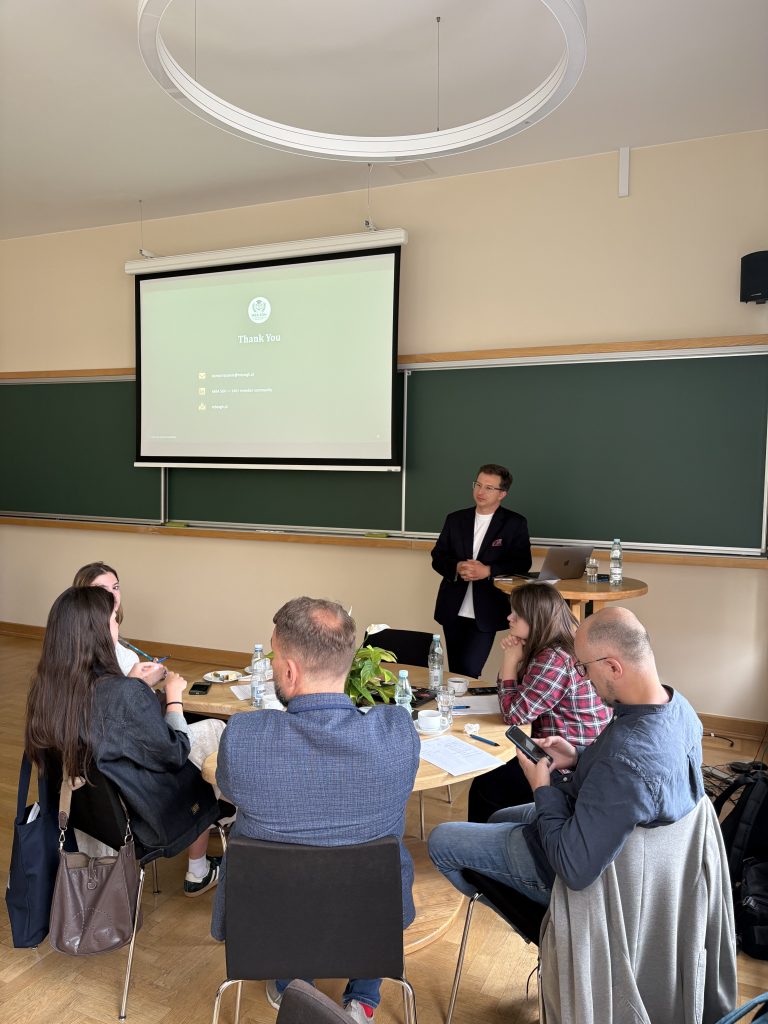
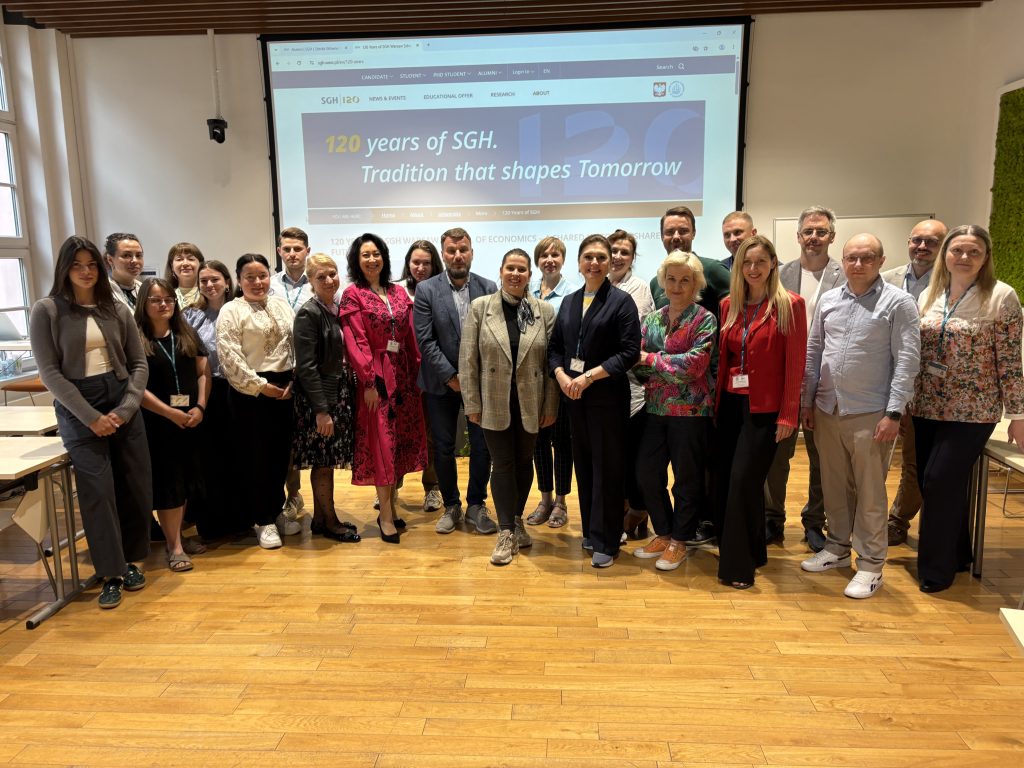
On 6–10 July 2026, SGH Warsaw School of Economics in Poland hosted the third study visit within the international ALMEX project — Alumni Management Excellence: Building University Capacity for Sustainable Graduate Engagement. The programme focused on Polish experience in organising systematic alumni relations, using data, protecting personal information and involving graduates in university development.
The study visit brought together representatives of the ALMEX partner institutions: Ukrainian Catholic University, Sumy State University, Zaporizhzhia National University, the National University of Water and Environmental Engineering, SGH Warsaw School of Economics, and the National Agency for Higher Education Quality Assurance.
Over five days, representatives of SGH Warsaw School of Economics presented the specific features of the university’s work with alumni. The sessions addressed the role of alumni relations in the university’s overall strategy, the division of responsibilities between departments, the identification of alumni needs, and the maintenance of contact after graduation.
The Polish team presented the development of the SGH alumni strategy and explained how it is connected with the university’s mission, career support, partnerships and the evaluation of study programmes. The programme also covered the work of the SGH Career and Alumni Centre, its main areas of responsibility, communication approaches, mentoring programmes and cooperation with alumni associations.
An important part of the programme was the presentation of Poland’s nationwide ELA graduate tracking system. The system makes it possible to analyse information on employment, income levels and the position of graduates in the labour market. Polish experts explained how these data can support the evaluation of study programme outcomes, programme development and institutional decision-making.
Considerable attention was given to the legal requirements governing the use of personal data. SGH representatives discussed the application of the European Union’s General Data Protection Regulation and Polish data protection legislation when collecting, storing and using alumni information.
The discussions addressed the legal grounds for data processing, procedures for obtaining consent, informing alumni about the purposes for which their information is used, restricting access to databases and defining data retention periods. Particular attention was also given to collecting only the information necessary for institutional purposes, keeping records up to date and providing an appropriate level of security.
The Polish team also explained the role of the Data Protection Officer and the division of responsibilities among staff members who work with alumni databases. This approach allows the university to determine who has access to information, why it is used and what procedures should be followed in the event of a data security breach.
Several sessions addressed digital systems for managing alumni contacts. SGH representatives explained how data are organised, communication history is recorded and alumni participation in events, mentoring programmes and other university initiatives is analysed. Digital tools were discussed together with the legal limitations and the university’s responsibility for the proper use of personal information.
The programme also covered Polish experience in involving alumni in quality assurance. SGH representatives presented their participation in surveys, advisory structures, study programme evaluation and international accreditation. Alumni professional experience helps the university understand changes in the labour market and consider them when updating educational content.
A significant part of the visit was a meeting at the Embassy of Ukraine in the Republic of Poland. The discussion focused on cooperation between Ukrainian universities and their alumni who live or work abroad.
Participants discussed how universities can maintain contact with graduates in Poland, bring them together around professional and educational initiatives, and involve them in university communities. Possible areas of cooperation included professional networks, joint events, mentoring programmes, student support and the exchange of information about education, employment and international cooperation opportunities.
The participants also discussed the possible role of the Embassy in establishing contacts with Ukrainian communities and professional associations in Poland. Such cooperation could help universities identify their alumni abroad, maintain regular communication and involve them in initiatives that support students, universities and the Ukrainian academic community.
During the final discussions, participants summarised the experience gained through the study visits to Vrije Universiteit Amsterdam (the Netherlands), the University of Alicante (Spain) and SGH Warsaw School of Economics (Poland). Each institution presented a different approach to alumni relations, while the visit to Poland provided a more detailed understanding of legislation, data management, graduate tracking and the work of dedicated university structures.
The experience gained in Poland will inform the development of alumni engagement strategies, internal data protection procedures, digital solutions and models for maintaining contact with graduates abroad. The next stage will focus on reviewing the collected materials and adapting them to the needs of the Ukrainian partner universities.